Wedding Venue Tour Questions: A Checklist to Bring

Ask for the posted occupant load. Minnesota's fire code counts 15 square feet per person at tables and 7 for chairs or dancing, so a 2,000 square foot room seats about 133 at tables. This checklist has 19 tour questions, each with the reason it matters to your photos, light or timeline.
Print it and take it on every tour. The questions are grouped by what they change, with two tables of published numbers and six phone photos to take while a coordinator talks.
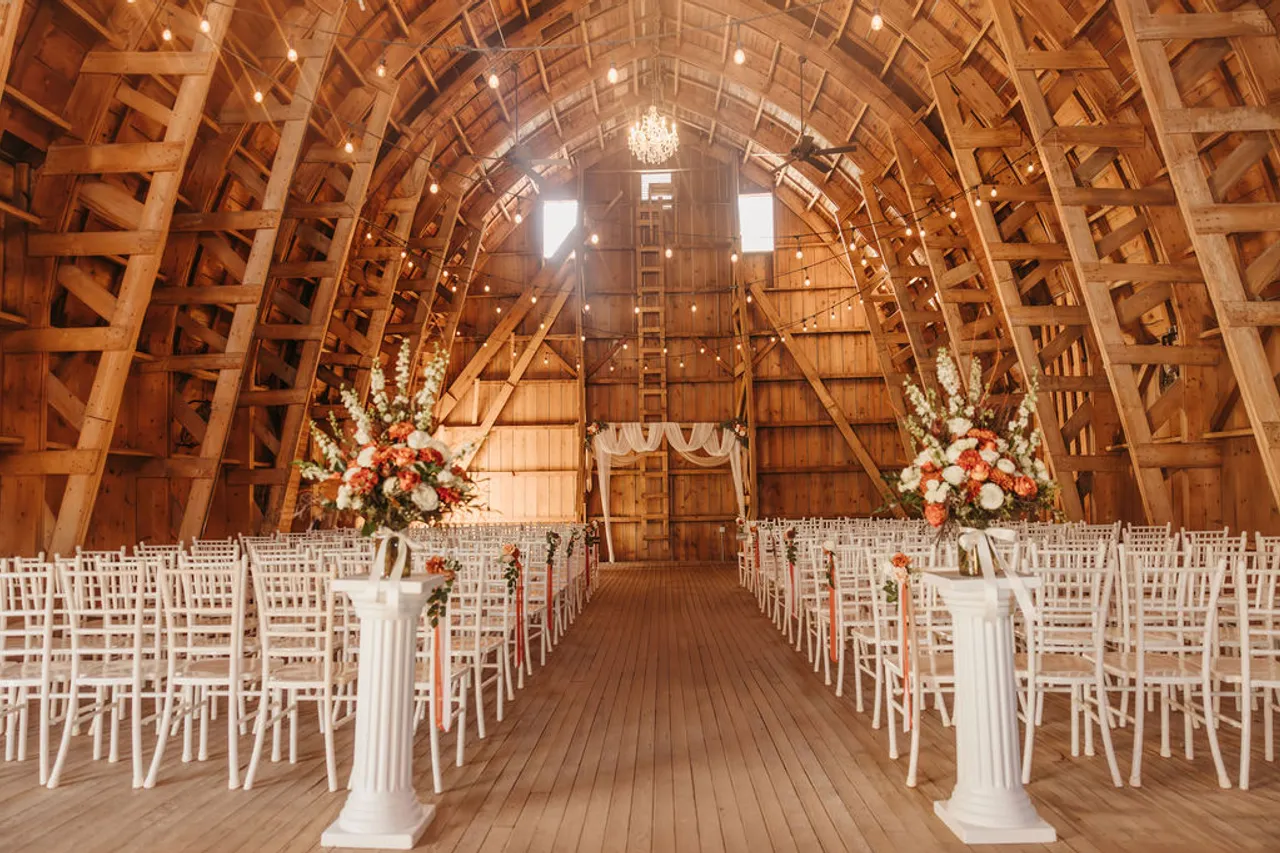
The tour checklist
These are my recommendations, not a record of how I work with any couple. Tour at the hour your event will run if you can, because a weekday morning shows little about a Saturday evening.
Access and timeline
- What time may hair, makeup, vendors and the wedding party enter? Photos of the details and getting ready cannot start until the room is open. Landmark Center, for example, publishes 11:00 a.m. for vendors and clients and 9:00 a.m. for dressing rooms.
- Is there a getting-ready room, and when must it be empty? The Arboretum's changing rooms run 9 a.m. to 6 p.m. A room that closes before the party ends changes where bags and dresses stay all evening.
- Is another event in the building that day? Shared corridors, restrooms and parking can slow portraits and the guest arrival.
- What are last call, music off and the time the last item must be out? They are three different numbers, and the last dance and the exit photo depend on them.
- Where is the rain plan, may we stand in it, and who decides when? A plan you have not seen can eat the ceremony start.
Light and rooms
- Which way do the ceremony and reception windows face, and at what time did we visit? A west window is a glare problem in a mid-afternoon ceremony. The September wedding guide shows how fast sunset moves in one month.
- What is the ceiling height, ceiling color and lighting, and are colored uplights used? A low dark ceiling and colored light change how a reception photographs.
- Where will the head table, DJ and bar sit? Whatever is behind the head table appears in every toast photograph.
- May we stand at the ceremony spot, the first-dance spot and the wall behind the head table? Those three positions shape more photographs than the exterior does.
- Is there an indoor option for portraits if it is cold or wet? Ask to see it, not hear it described.
- How far is the walk from parking to the ceremony, and is it step-free? A long walk adds guest arrival time to the timeline.
Capacity and fire safety
- What is the posted maximum occupant load, and what is it with our floor plan? The Minnesota State Fire Marshal says the fire code requires a sign showing it. The table below shows why the number depends on layout.
- May we use candles or open flame? The Fire Marshal says candles are prohibited in aisles and exits, and names the wedding aisle explicitly. Ask what the venue allows before you buy decor.
Money and contract
- Is catering open, preferred, exclusive or in-house? It decides the load-in and the food budget. The table in the outside catering guide compares eight venues.
- Who holds the liquor license, and may we bring any alcohol? See BYOB and outside alcohol for the permits and fees.
- What fees land on top: service charge, security, insurance, overtime? Ask for a total with every fee named. Hours past the posted end time are usually the expensive ones.
- What changes on a Friday, a Sunday or in January? A date that costs less may also have earlier sunset or shorter access.
- May we have the written policy for each answer? A verbal yes on a tour is not the contract. The venue contract checklist lists the clauses to confirm.
- Can we see photographs of the room at our time of year? A marketing gallery is shot in ideal conditions, and the room in your season may look different.
What your room can actually hold
The State Fire Marshal's assembly occupancies page (no date shown; checked November 2026; it cites the Minnesota State Fire Code without naming an edition) classifies buildings used for gathering by 50 or more people as assembly occupancies. It gives 15 square feet per person for seating at tables and chairs, and 7 square feet per person for chair-only seating and for dance floor areas. It says the code requires a sign showing the maximum occupant load, a minimum of two exit doors for 50 to 500 people, outward-swinging exit doors, and that each three-foot-wide exit door may serve 160 people. It does not give a standing figure.
The columns below are my arithmetic with those figures, using floor area. They are an estimate, and the posted occupant load set by the fire official governs.
| Room area | At tables and chairs (15 sq ft each) | Chairs only (7 sq ft each) | 3,000 sq ft room with a 600 sq ft dance floor and tables on the rest |
|---|---|---|---|
| 1,500 sq ft | 100 | 214 | |
| 2,000 sq ft | 133 | 285 | |
| 3,000 sq ft | 200 | 428 | 245 (2,400 sq ft at 15 = 160, plus 600 sq ft at 7 = 85) |
| 4,000 sq ft | 266 | 571 |
Venues publish their own numbers, and they show the same split between seated and other layouts. St. Paul Event Center says it holds up to 420 seated and 680 standing. Landmark Center's cortile holds 320 for a seated dinner with dancing, 400 theater style and up to 750 for a standing reception. Union Depot lists 3,000 for the Waiting Room and 200 for the Red Cap Room. Ask which of these numbers your layout uses.
| Venue | Published capacity | Published access or hours | Source (checked November 2026) |
|---|---|---|---|
| St. Paul Event Center | 420 seated, 680 standing | 16 hours of event time including early access; load-in time not listed | Wedding venue page |
| Landmark Center | Cortile: 320 seated dinner with dancing, 400 theater, 750 standing | Vendors and clients 11:00 a.m.; dressing rooms 9:00 a.m. | Rental FAQs |
| Minnesota Landscape Arboretum | Not on the FAQ page | Changing rooms 9 a.m. to 6 p.m.; reception decoration setup from 10 a.m.; vendor delivery during the access times on the event contract | Wedding FAQ |
| Union Depot | Waiting Room 3,000; Red Cap Room 200 | Access for a pre-determined time that varies by event | Weddings page |
| Round Lake Vineyards & Winery | Not on the FAQ page | Standard rental 10 a.m. to midnight; items out of the Ballroom by midnight | Wedding FAQs |
None of these pages shows an effective date. A venue with only a 2026 copyright is a snapshot, so ask for the current terms. Venue rows like these also feed the timeline template.
Six phone photos to take on the tour
Coordinators talk and phones remember. I recommend these six, even before you have hired a photographer.
- The ceremony spot, from where a guest in the back row would sit.
- The windows, with a note of which way they face and the time you visited.
- The getting-ready room, including its worst wall and its best window.
- The reception room, empty, from the door and from the far corner.
- Any indoor or rain option, and the walk to it.
- The ceiling, fixtures and wall color.
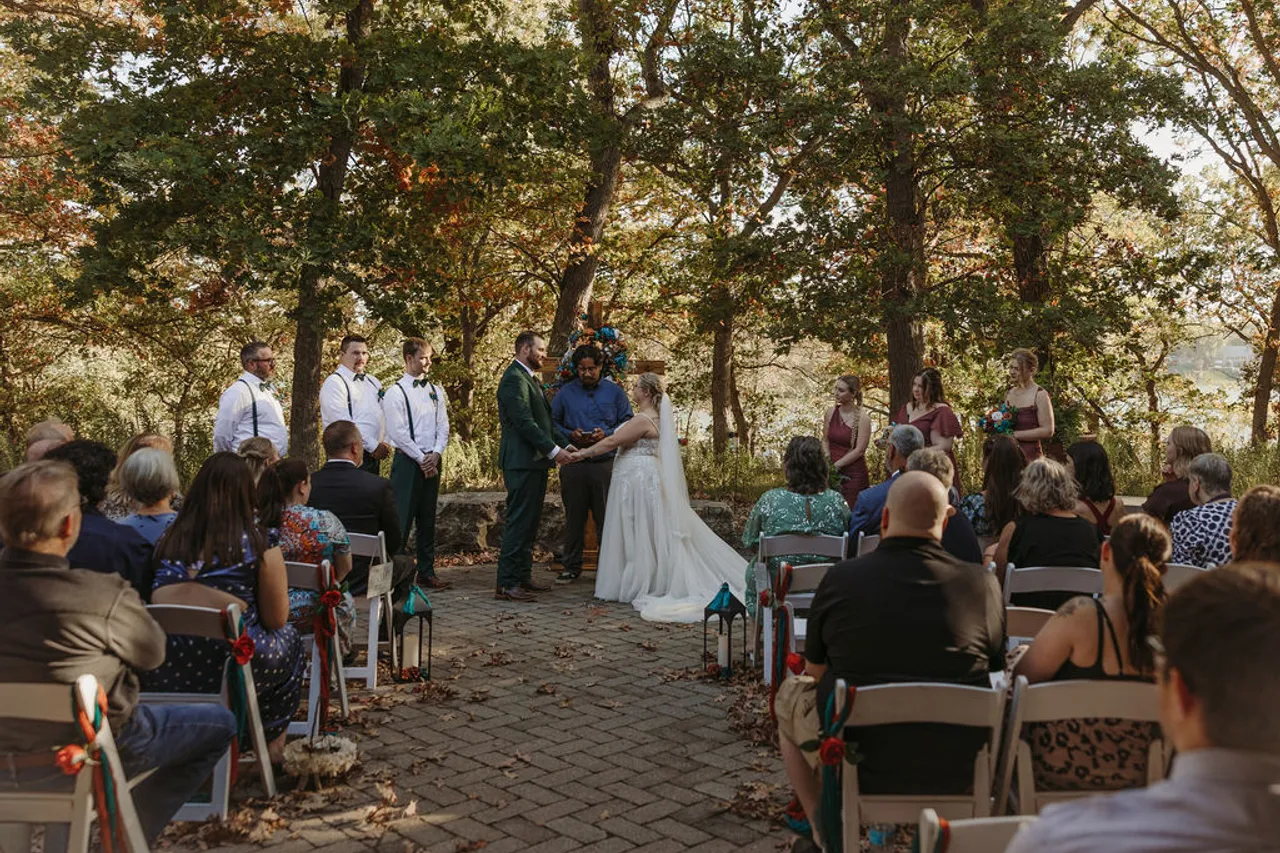
For a ceremony outdoors, such as the oak-lined brick aisle at Lauren and Henry's Silverwood Park wedding (October 10, 2026, a Three Rivers venue), the back-row photo shows where the sun will fall and where guests will stand. To choose rooms to tour, see the venue guides. Timeline help is included with each collection on my wedding collections page.
Frequently asked questions
Why is a venue's standing capacity higher than its seated capacity?
Because tables take floor space. The Minnesota State Fire Marshal counts 15 square feet per person at tables and chairs but 7 for chair-only seating or a dance floor. St. Paul Event Center lists 420 seated and 680 standing, and Landmark Center's cortile 320 for a seated dinner with dancing and 750 standing. Ask which figure your floor plan uses.
What is the occupant load of a wedding venue?
It is the maximum number of people the fire code allows in the space, and it must be posted on a sign. The Minnesota State Fire Marshal's page counts 15 square feet per person for tables and chairs and 7 for chair-only seating or dance floor areas. A 2,000 square foot room works out to about 133 at tables.
Can we have candles at a Minnesota wedding venue?
Sometimes, but not in aisles or exits. The State Fire Marshal says candles are prohibited in aisles and exits and notes that candles along a wedding aisle are what the code prohibits. Decorative open flame elsewhere is allowed in places of assembly when the fire code official is satisfied that safeguards are in place, so get approval first.
Should we tour a venue at the time of day of our wedding?
Yes, if you can. Light, noise and parking differ between a weekday morning and a Saturday evening, and the window direction matters most for a ceremony. If you cannot, ask which way the main windows face and what is outside at that hour, then check it against the sunset time for your date.
Which photos should we take on a venue tour?
Six: the ceremony spot from the back row, the windows, the getting-ready room, the empty reception room from the door and the far corner, any indoor or rain option, and the ceiling and fixtures. Note the time of day and which way the windows face on each photo so the light can be judged later.
Sources
- Minnesota State Fire Marshal: Assembly occupancies (checked November 2026; no page date)
- Minnesota State Fire Marshal: Candles and open flames (checked November 2026; no page date)
- Landmark Center: Rental FAQs (checked November 2026; no page date)
- Minnesota Landscape Arboretum: Wedding FAQ (checked November 2026; no page date)
- St. Paul Event Center: Wedding venue (checked November 2026; no page date)
- Union Depot: Weddings (checked November 2026; no page date)
- Round Lake Vineyards & Winery: Wedding FAQs (checked November 2026; no page date)
Related Service
Looking for the perfect Twin Cities venue?
Real venue reviews from a photographer who's worked them — Hutton House, Machine Shop, Nicollet Island, and more.
Written by Emma Ziegler, a Minneapolis wedding photographer with 200+ weddings behind her.
Ready to Book Your Session?
I'd love to hear about your wedding day or creative project. Let's make something beautiful together.
Keep Reading


