Chinese Tea Ceremony Wedding Photography: Planning Guide
In a Chinese wedding tea ceremony, the couple serves tea to elders, who answer with blessings and red packets or jewelry. For photos, the practical points are a written serving order, chairs near window light and a timeline with travel buffers. Customs differ by family and dialect group, so follow your parents' plan.
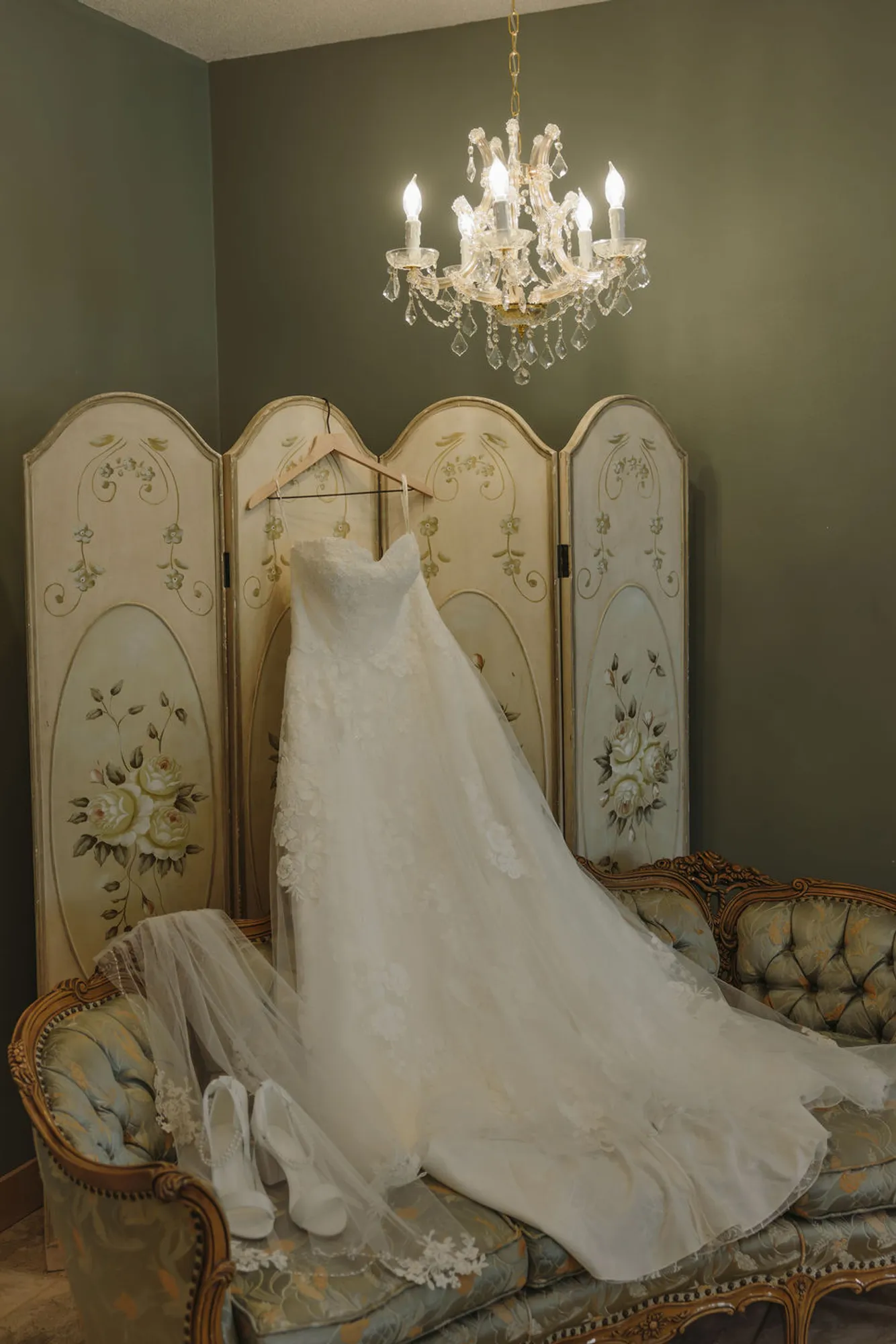
None of my featured weddings includes a tea ceremony, so the photos here are rooms and details from other weddings, and the photo planning is advice, not a record of a day I shot.
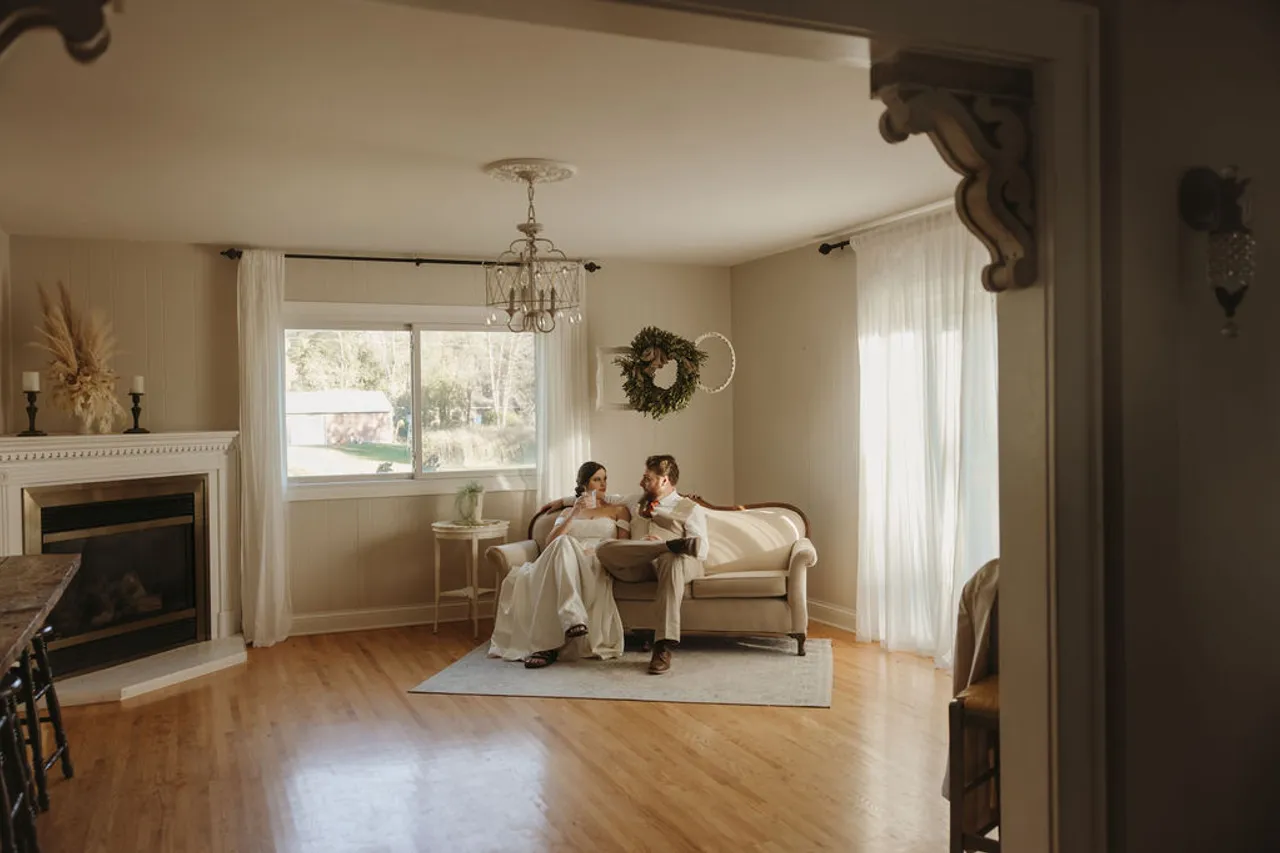
The parts of the ceremony and what each means for photos
The descriptions come from two sources that do not match in every detail: the Singapore National Heritage Board (Roots.sg) and the Chinese Historical and Cultural Project, a San Jose, California nonprofit. I found no Twin Cities source for the customs themselves, so treat the table as a starting list and let your family correct it. Sources checked November 2026.
| Part | What the sources describe | Photo planning advice |
|---|---|---|
| Bride serves her own parents | The Chinese Historical and Cultural Project says that before the groom arrives, the bride serves tea to her parents alone, holding the cups with both hands, to thank them for raising her. | Ask the family whether a photographer may be in the room. If so, the photographer has to be at the bride's home before the groom arrives. |
| Prayer at the family altar | The National Heritage Board says families who worship deities or ancestors at home pray at the altar before the couple serves tea. | Ask whether photographs are welcome during the prayer, and agree on what is off limits. |
| Tea for the groom's family | The National Heritage Board places the tea ceremony at the groom's home, where the couple serves elders and the elders give blessings. The Chinese Historical and Cultural Project describes starting with the groom's parents, then paternal grandparents, maternal grandparents, oldest uncles and aunts, and the groom's older brother. | Get the serving order in writing, with names and relationships, so each pairing is anticipated. |
| Seating and kneeling | The people being served sit and the couple kneels, with the woman on the left and the man on the right (Chinese Historical and Cultural Project). | Two chairs, cushions and a clear floor define the frame. Plan one angle over the couple's shoulders and one facing them. |
| Gifts | The National Heritage Board's collection record says elders are expected to give a hongbao (red packet) or jewelry. The Chinese Historical and Cultural Project says helpers also receive red envelopes, placed on the platter that holds the cups. | Decide who holds the gifts after each serving, and photograph the platter and cups before use. |
| What is in the tea | The Chinese Historical and Cultural Project says lotus seeds and two red dates express wishes for children early and every year, and that the sweetness wishes for sweet relations with the bride's new family. | Set the tea set out early for a detail photograph, especially if it is an heirloom. |
| Tea for the bride's family | The National Heritage Board describes a separate tea ceremony at the bride's home; its collection record says it takes place before or after the groom's family's. | Count it as a second location in the timeline, with travel between. |
| Younger relatives serve the couple | The collection record says the groom's younger siblings or cousins also offer tea to the couple. | Put them in the serving order so they are not photographed in a rush. |
Where it can happen
The sources set the ceremonies in the family homes on the wedding day. For a Twin Cities wedding, Minnesota Compass estimates about 45,330 Chinese Minnesotans, 81.3 percent of them in the Twin Cities region (2020 to 2024 data, checked November 2026), so homes in the same metro are common. If relatives travel in, a private room at the venue keeps everyone in one building.
Published room access varies, so ask for it in writing. Landmark Center's rental FAQ gives dressing rooms from 9:00 a.m. and vendor and client entry at 11:00 a.m. on event day, and the Minnesota Landscape Arboretum wedding FAQ gives changing rooms from 9 a.m. to 6 p.m. (both checked November 2026; neither page shows a date). Neither page says whether a tea ceremony can use those rooms.
Setting up the room
These are my recommendations, each with what happens if you skip it.
- Choose the room for its window light. A dark basement or a lamp-lit room pushes the photographer toward flash, which a family may not want near elders.
- Put the chairs across the light, a few feet from the wall. Facing the window makes faces squint, and chairs against the wall flatten the background.
- Add cushions where the family kneels. Without them the couple shifts and the moment looks stiff.
- Keep a side table for the tea set and platter. Cups and gifts left on laps end up in the frame.
- Name one relative on each side to gather people. Without one, the group photographs wait while relatives are found.
- Write the serving order. The first question at the first serving will otherwise be who is next.
A home tea ceremony also benefits from the same prep as a getting-ready room: clear surfaces and one color of lamp light. My getting-ready room photo checklist applies almost line for line, and the family formal photo list covers grouping for the portraits afterward.
A sample timeline with buffers
This is a template built from the order in the sources and a 5:00 p.m. ceremony, not a record of a wedding. It assumes the homes and venue are each a 30-minute drive apart and adds a 15-minute buffer to every move. The 90-minute tea blocks are placeholders; set the real length from the head count your family gives you.
- 9:00 a.m. Getting ready at the bride's home.
- 10:30 a.m. Bride serves tea to her parents, before the groom arrives.
- 11:00 a.m. Groom and groomsmen arrive; gatecrashing, if your family includes it.
- 11:30 a.m. Leave for the groom's home (30 minutes plus a 15-minute buffer).
- 12:15 p.m. Tea at the groom's home, then family portraits (90-minute placeholder).
- 1:45 p.m. Leave for the bride's home (30 minutes plus a 15-minute buffer).
- 2:30 p.m. Tea with the bride's family (90-minute placeholder).
- 4:00 p.m. Leave for the venue (30 minutes plus a 15-minute buffer).
- 5:00 p.m. Ceremony, then cocktail hour and dinner.
From the first getting-ready photo at 9:00 a.m. to dinner at about 7:00 p.m. is roughly 10 hours, and staying through toasts and the first dance takes it toward 12. In my collections that points to Ruby (10 hours, $5,100) or Sapphire (12 hours, $5,600), and two photographers come with Pearl and up. The coverage hours guide shows the arithmetic. If both families hold tea at the same time in different homes, one photographer cannot be in both places.
Red, attire and the tea set
The Smithsonian's National Museum of Asian Art says in its feature on Chinese red (published 2016, updated 2020) that red has been chosen for traditional wedding dresses and for envelopes holding gifts of money. The National Heritage Board says many couples wear Western suits and gowns, while some wear the traditional ma kua and qun kua for the tea ceremony, and that red symbolizes good fortune.
Its collection also holds a ceramic tea cup with a dragon and phoenix motif from a bride's dowry, dated 1960s to 1980s, whose motif symbolizes a happy, successful and prosperous marriage. For photography, a plain cream or wood backdrop lets red stand out, and saturated red under warm bulbs can lose detail, so ask your photographer how they handle it. If you change from red into other attire, list the portraits you want in each outfit.
For several traditions in one day, see the multicultural wedding photography guide, and for another tea-style family rite, the Korean pyebaek guide. The wedding collections page lists hours and photographers for each collection.
Frequently asked questions
Who serves tea to whom at a Chinese wedding?
The couple serves the elders, starting with the groom's parents. The Chinese Historical and Cultural Project then lists paternal grandparents, maternal grandparents, oldest uncles and aunts, and the groom's older brother. Singapore's National Heritage Board adds that younger siblings or cousins offer tea to the couple. Families and dialect groups differ, so follow your parents' order.
Should the tea ceremony be at home or at the venue?
Choose by the hosts, the light and the travel. The sources set the ceremony at the family homes, which is closest to the traditional sequence but adds drives between locations. A private room keeps everyone in one place. Ask the hosting parents first, then confirm in writing whether the venue lets you use a room and for how long.
What do the lotus seeds and red dates in the tea mean?
They are wishes for children. The Chinese Historical and Cultural Project explains that in Chinese, "lotus" and "year," "seed" and "child," and "date" and "early" sound alike, so the tea wishes the couple children early and every year. The page also says the tea's sweetness wishes for sweet relations with the bride's new family.
Do the couple wear red for the tea ceremony?
Some do, and many do not. Singapore's National Heritage Board says many couples wear Western suits and gowns, while some wear the traditional ma kua for the groom and qun kua for the bride at the tea ceremony. Red symbolizes good fortune in that account. Ask your family whether traditional attire is expected for this part of the day.
How long does a Chinese tea ceremony take?
None of the sources gives a length, so it depends on how many people are served. The serving order lists several rounds, from parents to grandparents to aunts, uncles and a brother, and younger relatives may serve the couple after. Count the people on your list, ask the hosts how long each serving takes, and add portrait time and travel.
Sources
- National Heritage Board (Roots.sg): Chinese Weddings (last updated October 15, 2020; checked November 2026)
- National Heritage Board (Roots.sg): Family and friends at a Chinese wedding tea ceremony (checked November 2026)
- National Heritage Board (Roots.sg): Chinese wedding tea ceremony cup (checked November 2026)
- Chinese Historical and Cultural Project: Tea Ceremony (checked November 2026; no page date)
- Smithsonian National Museum of Asian Art: Chinese Red (updated March 2020; checked November 2026)
- Minnesota Compass: Chinese cultural community (2020 to 2024 data; checked November 2026)
- Landmark Center: Rental FAQs (checked November 2026; no page date)
- Minnesota Landscape Arboretum: Wedding FAQ (checked November 2026; no page date)
Related Service
Planning your Minneapolis wedding?
Full-day coverage across the Twin Cities and beyond. Timeless, emotive photography that holds up decades from now.
Have a date in mind? Recent weddings, reviews and collections are all on my wedding photography homepage.
Ready to Book Your Session?
I'd love to hear about your wedding day or creative project. Let's make something beautiful together.
Keep Reading

