Minnesota Sunset Times by Month for Wedding Timing

Sunset time is the one variable in your wedding timeline you cannot negotiate. Everything else — hair and makeup, the ceremony, dinner service — can shift by fifteen minutes. The sun cannot. This is the reference I send couples when we start building a schedule.
In the Twin Cities, sunset runs from about 4:35 PM in December to about 9:00 PM in mid-June, and golden hour is roughly the 45 minutes before it. Start the ceremony about three hours before sunset with a first look, or three and a half to four hours without one.
Twin Cities sunset by month
Approximate mid-month sunset times for Minneapolis and St. Paul. Golden hour runs roughly the 45 minutes before each time, and usable light ends about 20 to 30 minutes after.
- January — sunset near 5:00 PM. Golden hour 4:15–5:00 PM.
- February — sunset near 5:40 PM. Golden hour 4:55–5:40 PM.
- March — sunset near 7:20 PM after the clock change. Golden hour 6:35–7:20 PM.
- April — sunset near 8:00 PM. Golden hour 7:15–8:00 PM.
- May — sunset near 8:35 PM. Golden hour 7:50–8:35 PM.
- June — sunset near 9:00 PM, the latest of the year. Golden hour 8:10–9:00 PM.
- July — sunset near 8:55 PM. Golden hour 8:05–8:55 PM.
- August — sunset near 8:15 PM. Golden hour 7:30–8:15 PM.
- September — sunset near 7:25 PM. Golden hour 6:45–7:25 PM.
- October — sunset near 6:30 PM. Golden hour 5:50–6:30 PM.
- November — sunset near 4:45 PM after the clock change. Golden hour 4:05–4:45 PM.
- December — sunset near 4:35 PM, the earliest of the year. Golden hour 3:55–4:35 PM.
Always verify the exact time for your specific date and location, since sunset shifts by a minute or two per day and venues west of the metro run a few minutes later than downtown St. Paul.
What ceremony time should you pick?
My rule: with a first look, start the ceremony about 3 hours before sunset. Without one, start about 3.5 to 4 hours before sunset so post-ceremony portraits still land in daylight.
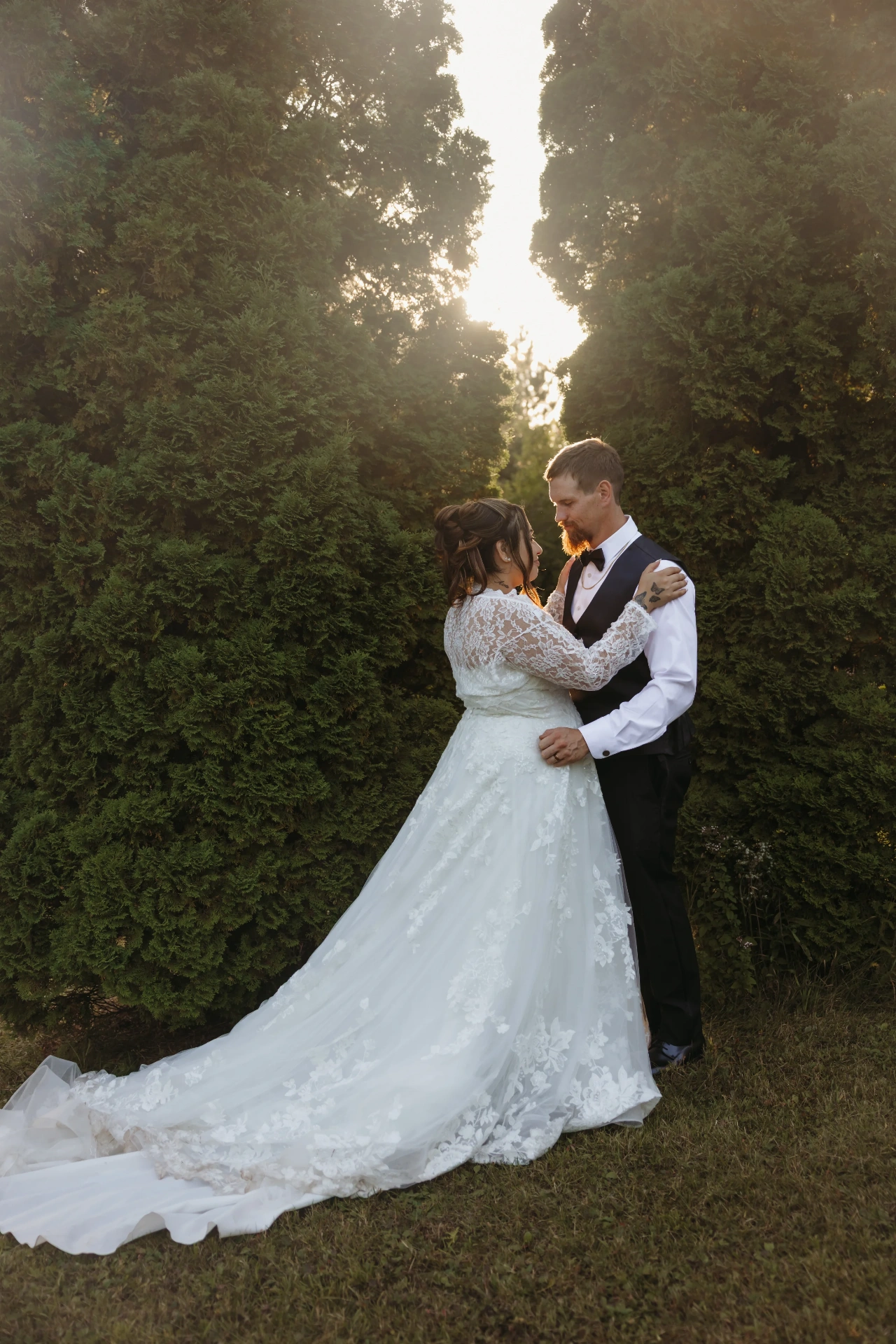
- June or July wedding, no first look — ceremony at 5:00 PM, portraits at 6:00, sunset portraits at 8:30.
- September wedding, first look — first look at 1:30 PM, ceremony at 4:00, sunset portraits stolen at 7:00.
- October wedding — ceremony at 3:00 PM. A 5:00 PM October ceremony means every portrait after it happens in the dark.
- December or January wedding — ceremony at 2:00 PM with a noon first look, or accept an entirely indoor, flash-lit portrait set.
Why does the clock change matter so much?
Because it moves sunset by a full hour overnight. A wedding on the first Saturday of November has 4:45 PM sunset while the last Saturday of October has 6:15 PM. Two weeks apart, ninety minutes of difference. Couples planning a late-fall wedding routinely miss this and end up scheduling a 5:00 PM ceremony that finishes in full darkness.
Blue hour, and why I ask for ten more minutes
The 20 minutes after sunset produce the deepest color in the sky and are ideal for a lit portrait: the ambient light goes cobalt while flash keeps you warm and separated. Reception venues with a skyline, a lake, or exterior lighting shine in blue hour. If we get one more break in the evening, this is when I want it.
Building the timeline backward
Take your sunset time, then work backward:
- Reserve 15 minutes for couple's portraits ending at sunset.
- Place dinner and toasts before that window, not during it.
- Set cocktail hour immediately after the ceremony.
- Allow 45 to 60 minutes for family and wedding party formals.
- Set the ceremony 3 to 4 hours before sunset based on the first-look decision.
- Count back 2.5 hours for getting ready, or 3.5 with a first look.
Do this once on paper and the rest of your vendor scheduling falls into place.
Frequently asked questions
What time is golden hour in Minnesota?
Golden hour is roughly the 45 minutes before sunset, which ranges from about 3:55 PM in late December to about 8:10 PM in mid-June in the Twin Cities. Verify your exact date, since it moves a minute or two daily.
What time should a wedding ceremony start for the best photos?
About three hours before sunset if you are doing a first look, and three and a half to four hours before sunset if you are not. That places family formals, wedding party photos, and couple's portraits in daylight with a sunset window still available.
How late is sunset in Minnesota in June?
Around 9:00 PM in the Twin Cities in mid-to-late June, the latest of the year. Usable light lasts until roughly 9:30 PM, which is why summer couples can shoot portraits well into the reception.
Can we still get sunset photos if dinner is during golden hour?
Yes. Slipping out for 10 to 15 minutes between courses is standard and guests rarely notice. I flag the exact time on the printed timeline so your coordinator can plan around it.
Want your date mapped out precisely? Send me your ceremony time and venue through the contact page and I will build the hour-by-hour schedule around your actual sunset.
Adjusting Your Timeline for Cloud Cover
The month-by-month sunset times above assume a clear sky, but Minnesota does not deliver a clear sky on demand. On an overcast day, the dramatic, warm-toned last hour of light before sunset simply does not happen — the light stays soft and diffused for longer, which is actually forgiving for photography, but it changes the timing math. On a heavily overcast day, good portrait light is often available for three to four hours before sunset rather than the 45-minute window on a clear day, because there is no harsh midday sun to avoid and no dramatic falloff to chase. The trade-off is that you lose the warm backlit look entirely — cloudy light stays cool and even from midday straight through to dusk.
The Sneak-Out Photo Plan for Indoor Receptions
When your ceremony sits early in the day and your reception runs through sunset, the couple's best light of the evening often falls in the middle of dinner or the first dance set. Rather than rebuilding the whole timeline around it, plan a five-to-ten-minute sneak-out:
- Flag the exact sunset time on the printed timeline your coordinator and DJ both have.
- Pick a spot within a two-minute walk of the reception space — a courtyard, a dock, a doorway with the right light — so the disappearance is brief.
- Time it between courses or right after toasts, never during a scheduled dance, so guests do not notice you are gone.
- Keep it to two or three frames of direction rather than a full session; the goal is one great image, not a second portrait block.
Regional Daylight Differences Across Minnesota
Sunset times above are calculated for the Twin Cities metro, but Minnesota stretches roughly 400 miles north to south, and daylight length changes meaningfully across that distance. Northern Minnesota — Duluth, the North Shore, International Falls — sits far enough north that both summer and winter daylight swings are more extreme than in the metro: summer evenings stay light noticeably later, and winter afternoons go dark noticeably earlier. If your wedding is on the North Shore or in far northern Minnesota, treat the Twin Cities times above as a rough guide only and confirm the exact sunset for your specific date and latitude rather than assuming metro timing applies.
Related Service
Planning your Minneapolis wedding?
Full-day coverage across the Twin Cities and beyond. Timeless, emotive photography that holds up decades from now.
Related Guides
Keep planning with these guides
- Minneapolis Wedding Day Photography Timeline
Turn sunset time into an hour-by-hour plan.
- How Many Hours of Wedding Photography Do You Need?
Match coverage length to your daylight window.
- Minnesota Winter Wedding Photography Guide
Planning around a 4:35 PM sunset.
Ready to Book Your Session?
I'd love to hear about your wedding day or creative project. Let's make something beautiful together.
Keep Reading

