Minnesota Winter Wedding Photography Guide

Winter is the season most Minnesota couples talk themselves out of, and it is also the season that produces the most distinctive galleries I deliver all year. Here is exactly how I plan a winter wedding day so the cold works for the photos instead of against them.
A Minnesota winter wedding gives you under nine hours of daylight around the solstice: on December 21, Minneapolis sunrise is 7:48 AM and sunset 4:34 PM, according to the U.S. Naval Observatory. Every outdoor portrait has to happen before about 4:00 PM in December, which almost always means scheduling a first look.
How much daylight do you actually get?
This is the number that decides your whole timeline. Naval Observatory data for Minneapolis puts sunset at 4:39 PM on December 28, 5:19 PM on January 31, 5:59 PM on February 28, and 7:39 PM on March 31 (after the clock change). I treat usable soft light as ending about 20 minutes before sunset in winter.
How I schedule a December or January wedding day
For a month-by-month table, see my Minnesota sunset times guide. Practical translation: for a December or January wedding, every outdoor portrait has to happen before 4:00 PM. That almost always means a first look. I schedule couple's portraits at 2:30 PM, wedding party at 3:00 PM, and family formals indoors after the ceremony, which flips the standard summer order on its head. My December wedding guide and February wedding guide go month by month.
What does 10-degree weather do to a portrait session?
Honestly, it shortens it. My rule is 8 to 12 minutes outside per outfit, in two or three short bursts, with a warm room within a 60-second walk. That is enough for a full set of frames if we scout the spots in advance and do not wander.
How cold is too cold for outdoor portraits?
The CDC notes that frostbite usually affects the nose, ears, cheeks, chin, fingers and toes, and that redness or pain can be the first sign. The National Weather Service gives an example where exposed skin can freeze in 30 minutes at a wind chill of -19°F. I plan well inside those limits, because no retouching fixes a miserable expression.
What to bring to a winter session
What I bring: hand warmers, a blanket that never appears in frame, and a lens cloth for the condensation that fogs everything when we walk back inside. What I ask couples to bring: real boots for the walk, plus a coat you actually like being photographed in. A borrowed parka in every frame is the most common winter regret.
Does snow ruin wedding photos?
Falling snow is one of the best things that can happen to a winter wedding gallery. It catches flash beautifully, softens backgrounds into a clean wash, and reads as unmistakably Minnesota. What actually causes problems is a gray, snowless January day, when the landscape is brown and flat. On those days I move portraits indoors or to a location with architectural interest.

Which Twin Cities venues photograph well in winter?
Venues with real indoor light
Winter separates venues with windows from venues without them. Machine Shop in Northeast Minneapolis lists windows around its second level, Landmark Center in St. Paul has its Musser Cortile atrium, and the Como Park Conservatory, Nicollet Island Pavilion and Union Depot's Waiting Room all give me daylight indoors when it is too cold to step outside. That single feature matters more in January than the guest count, the caterer or the decor budget. Check each venue's photography rules before you plan around it.
Venues with a covered walk
A heated corridor or attached hotel changes everything. Downtown hotels such as the Hewing Hotel give me interior texture within a warm building, so couples can get portraits without stepping outside for long.
Where can you take a 10-minute winter portrait burst?
Stone Arch Bridge with the frozen river below, the Mill City Museum ruins under snow, Minnehaha Falls when the falls freeze, and Rice Park outside Landmark Center. Each works as a short detour from a reception nearby. Confirm any park or conservatory photography permits before the day.
Is winter light good for wedding photos?
Low winter sun means the soft window is long and the light is directional all afternoon. At 2:00 PM in January the sun already sits lower in the sky than it does at 6:00 PM in July. Snow acts as a giant reflector under the chin, which is why winter skin tones often come out cleaner than midsummer ones. I shoot most winter portraits at wide apertures and slightly overexpose so the snow stays white instead of gray.
What should you plan differently for a winter wedding?
- Portraits before the ceremony, always. Waiting until after means shooting in the dark.
- A named indoor backup for every outdoor shot. Written into the timeline, not improvised.
- Extra time between locations. Road conditions after a snow event slow every drive, so pad the timeline.
- Off-camera flash from cocktail hour on. Once the sun is down around 4:40 PM, the entire reception is a lit event.
- A getting-ready room chosen for its windows. Overhead hotel lighting is the least flattering light of the day.
Is a winter wedding cheaper in Minnesota?
Often it is. January through March is off-peak for many Twin Cities venues and vendors, so ask venues what they charge for off-peak dates, and expect first-choice dates to be easier to get. My own wedding collections are 10% off for dates from December 15 to March 15, as listed on my services page. If your budget is fixed, a February Saturday can buy more than the same money in September.
Why do snow photos come out gray?
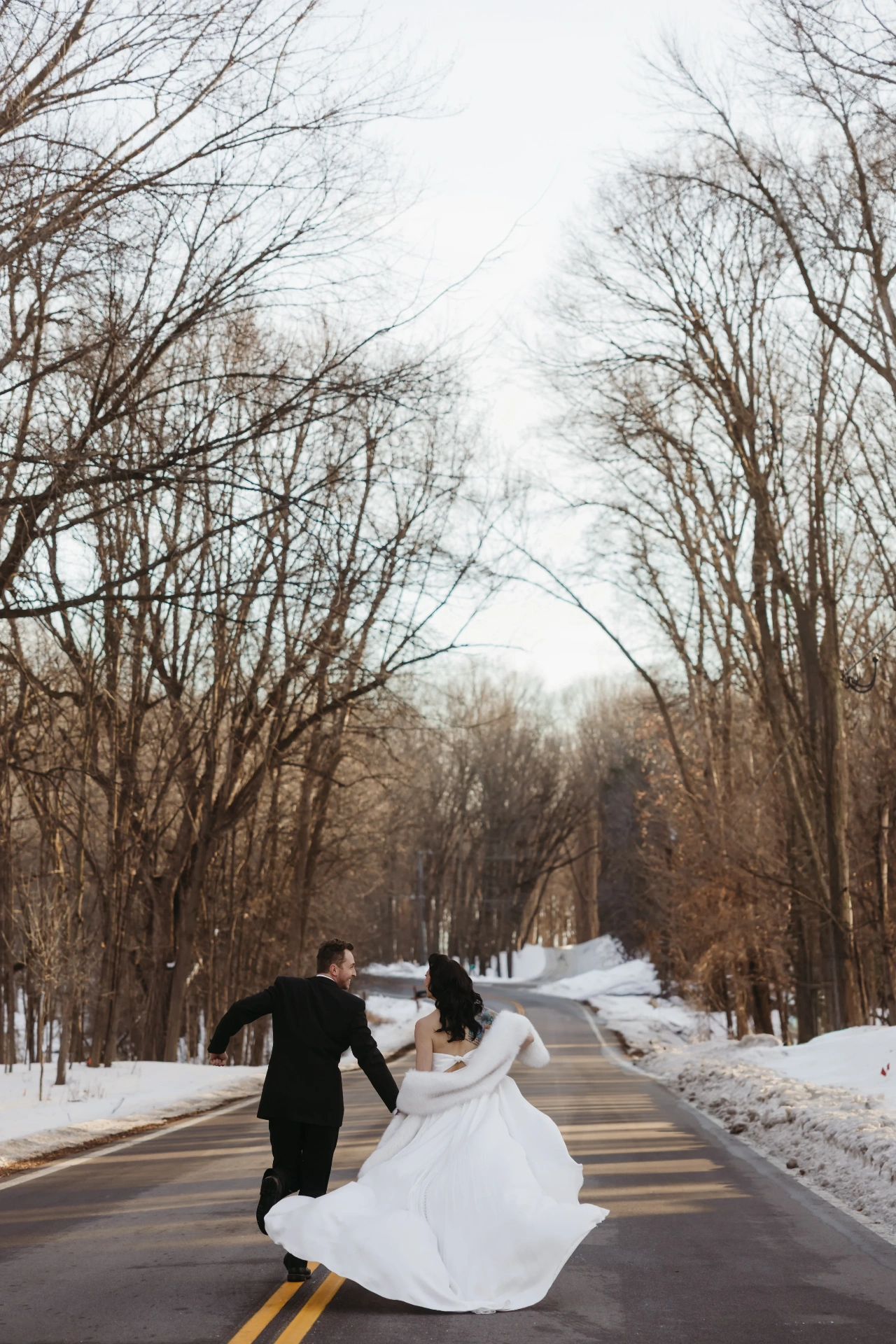
A light meter assumes the world averages out to mid-gray. Fill the frame with snow and it renders that snow gray, which is why so many winter phone snaps come back dull and blue instead of bright. I meter deliberately over what the camera suggests on a full-snow scene, and I expose for skin rather than for the ground. It is the biggest reason professional winter galleries look luminous while guest photos from the same ceremony look muddy.
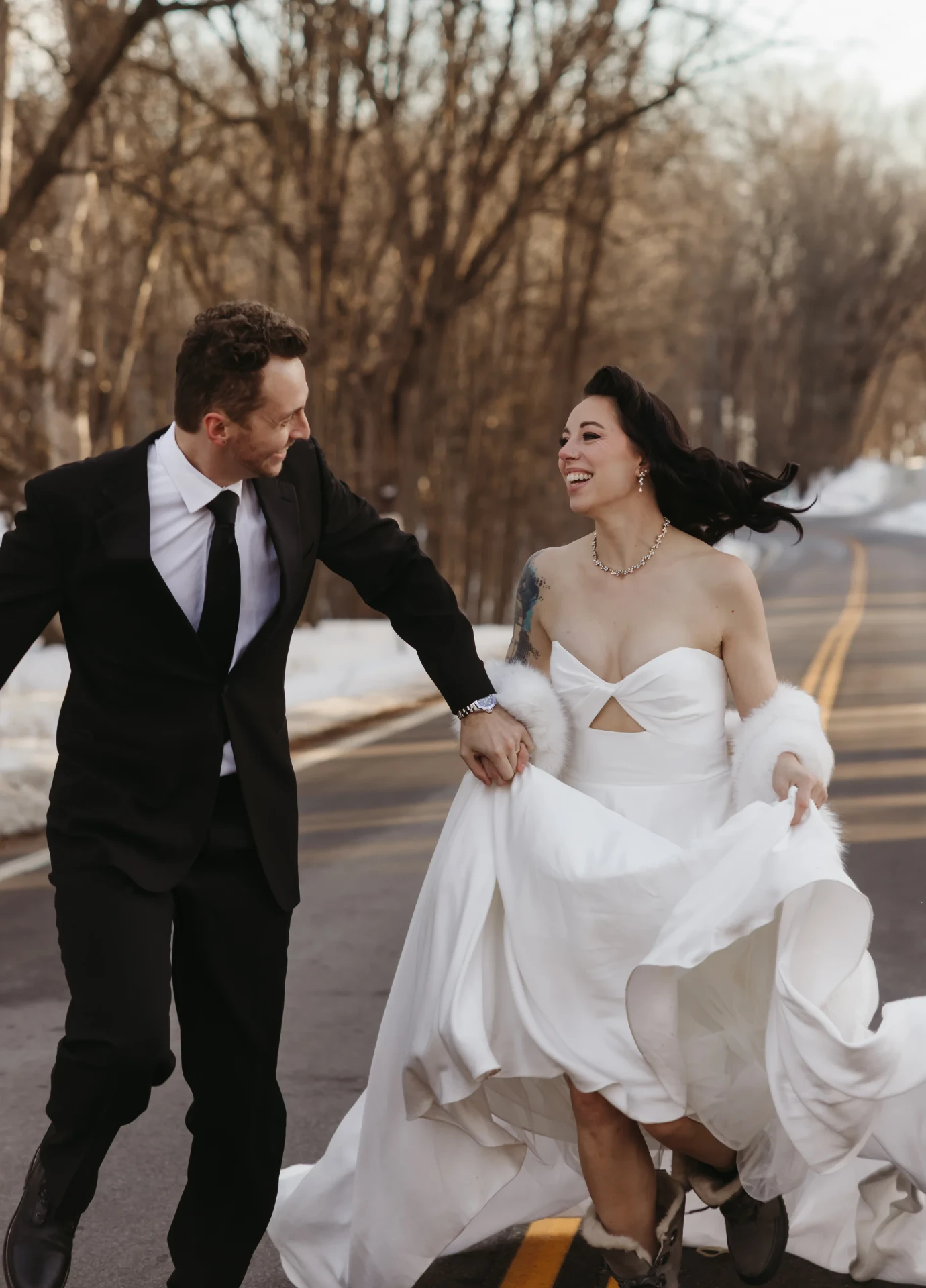
Overcast snow days are quietly some of the best light of the year in Minnesota. Cloud cover softens the sun into a giant diffuser and the snow underneath bounces it straight back up, filling shadows under the eyes and the brim of a hat. It is the reason I stop couples from rescheduling a gray forecast.
What happens to the camera when you walk back indoors?
Cold glass hitting warm air fogs instantly, and a fogged lens cannot be wiped clear in the moment. I plan around it: gear acclimates in a bag before it comes back into the room, and I keep a second body that stayed warm for the first few minutes after any outdoor block. Batteries are the other cold-weather tax, since they lose capacity in the cold, so spares live in an inside pocket rather than in the bag.
How long can you stay outdoors at each temperature?
These are the outdoor windows I plan for, measured with wind chill rather than the raw number on the forecast. They are my own working limits, not official safety thresholds, and I shorten them further for older guests or anyone who looks uncomfortable.
| Conditions | Comfortable outdoor block | What I plan |
|---|---|---|
| Above 30°F | 25 to 35 minutes | A normal portrait session, coats optional in frame |
| 15 to 30°F | 15 to 20 minutes | One location, coats on between every setup |
| 0 to 15°F | 10 minutes | Short bursts with a warming break, indoor backup ready |
| Below 0°F | 5 minutes | Doorway and lobby light, with one quick outdoor run |
For a timeline you can build backward from sunset, use my wedding day timeline template.
If you are considering a winter date, I would love to talk through the timeline with you. Start with my Minneapolis wedding photographer page or my wedding collections, or reach out directly and I will send you a sample winter-day schedule built around your ceremony time.
Frequently asked questions
Can you take wedding photos outside in a Minnesota winter?
Yes, in short bursts. I plan 8 to 12 minutes outdoors per outfit with a warm space nearby, which is plenty for a full set of couple's portraits. In bitter cold I keep outdoor time to a single five-minute burst and shoot the rest indoors, so everyone stays comfortable and looks relaxed in the photos.
What time should a winter wedding ceremony start in Minnesota?
For a December or January wedding, I recommend a 2:00 or 2:30 PM ceremony with a first look around noon. With sunset near 4:35 PM in December, that places all portraits in daylight and starts the reception right as the sun sets, which feels natural rather than rushed.
What should I wear over my wedding dress in winter?
Choose one outer layer you genuinely like on camera: a faux fur wrap, a long wool coat in a color that complements your palette, or a cape. It will appear in a third of your outdoor frames, so it should look intentional rather than borrowed. Test it with your dress before the day.
Do winter weddings cost less in the Twin Cities?
Often, because January through March is off-peak, but ask each venue and vendor for their own rates. My wedding collections are 10% off for dates from December 15 to March 15. Availability is also usually wider for winter dates, which gives you more choice of venue and photographer.
Sources
Related Service
Planning your Minneapolis wedding?
Full-day coverage across the Twin Cities and beyond. Timeless, emotive photography that holds up decades from now.
Related Guides
Keep planning with these guides
- Minnesota Sunset Times by Month: Plan Your Wedding Timeline
Winter sunsets fall before 5 PM — build the timeline around them.
- Rain on Your Minnesota Wedding Day: The Photographer's Plan
The weather contingency plan for any Minnesota season.
- Best Months for a Minnesota Wedding
How winter compares to the rest of the calendar.
Ready to Book Your Session?
I'd love to hear about your wedding day or creative project. Let's make something beautiful together.
Keep Reading

