Minnesota Barn Wedding Venues: A Photographer's Guide

Barn venues are among the most requested and most misunderstood wedding settings in Minnesota. From the outside they photograph like a magazine spread. From the inside, half of them are a dim brown box with string lights and no windows. Here is an honest photographer's breakdown, from the metro out into Wright, Carver, Dakota, and St. Croix counties.
Minnesota's best-photographing barn venues share three traits: tall windows or open hay doors for daylight, whitewashed rather than dark-stained rafters, and open grounds within a two-minute walk for portraits. Check all three on every tour.
What separates a great barn venue from a hard one?
Three things, in this order:
- Window placement. A barn with tall side windows or open hay doors gives me directional daylight all afternoon. A sealed barn means every getting-ready and reception frame is lit artificially.
- Ceiling color. Whitewashed rafters bounce light back down onto faces. Dark stained wood swallows it, which forces flash earlier in the evening.
- Grounds within a two-minute walk. Tree lines, a field, a pond, or a gravel drive give me portrait variety without eating your timeline in shuttle time.
Which Minnesota barn venues are worth touring?
West metro and Carver County
The Outpost Center in Chaska pairs a climate-controlled barn with an outdoor ceremony site and open grounds. Gale Woods Farm in Minnetrista, just west of Lake Minnetonka, pairs a working farm with a pavilion overlooking Whaletail Lake.
East metro and the St. Croix Valley
Hope Glen Farm in Cottage Grove is an east-metro barn option; ask to see its getting-ready space on your tour. The venues clustered around Hastings and Prescott add bluff and river backdrops close by.
North metro and up Highway 10
The barns around Elk River, St. Francis and Rush City often sit on real acreage. Wide-open sky means a spectacular sunset window and no shade at 2:00 PM, so timeline planning matters more here than anywhere else.
How do you handle harsh midday light at a barn?
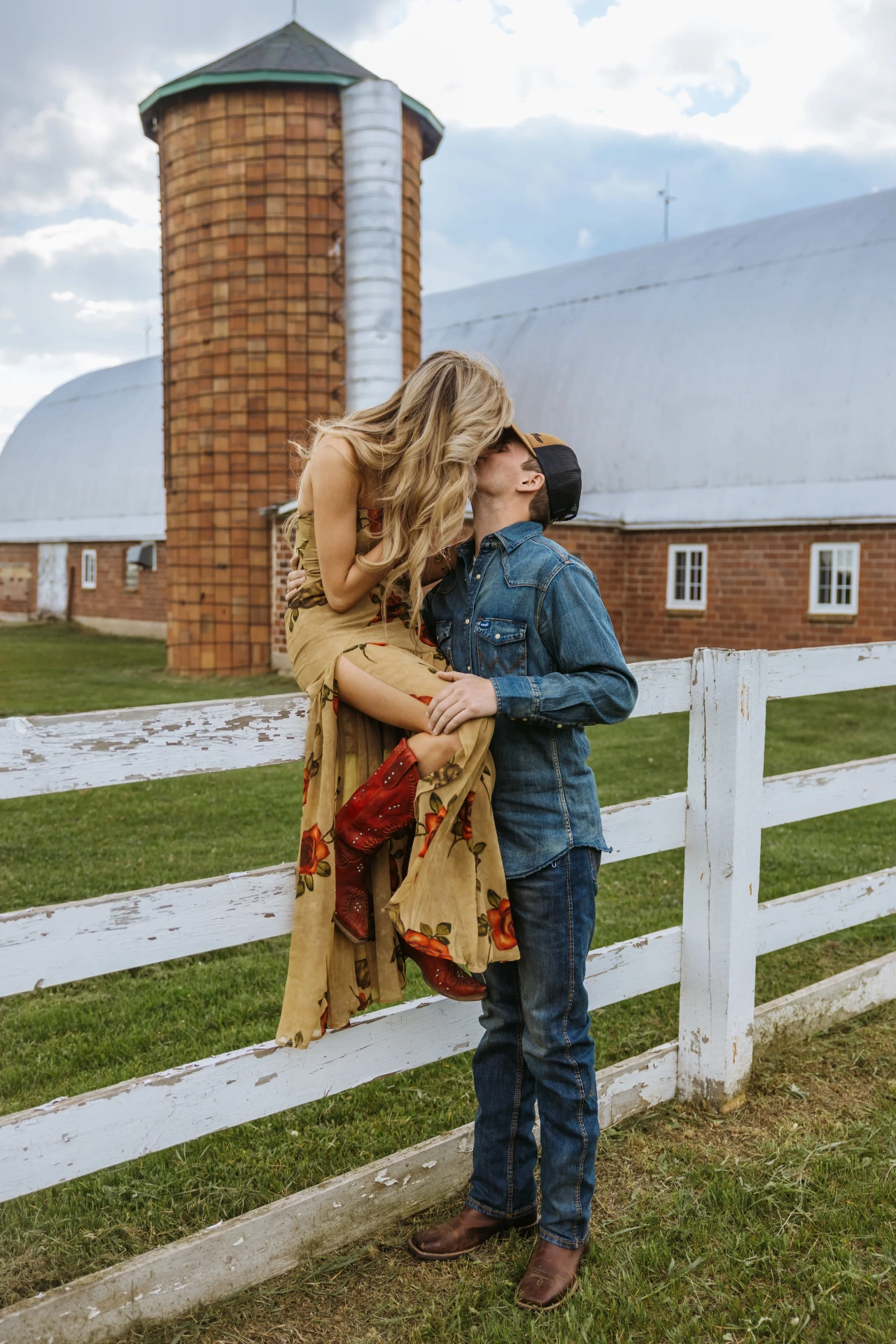
Most barn venues are surrounded by open field. Between roughly 11:00 AM and 4:00 PM in summer, the sun is high overhead with nothing to diffuse it. That is exactly when most first looks and wedding party photos are scheduled. Open shade under a tree line, the north side of the barn, or the inside of an open barn door all solve it, but only if we identify the spot before the day.
When I visit a barn venue in advance, I am mapping three things: the harsh-light shade spot, the golden hour spot, and the rain spot. Those three locations carry the entire portrait plan.
Do barn weddings need extra lighting?
Almost always, yes. Once the sun drops, a barn interior is lit by warm string bulbs that read as roughly 2200 Kelvin. That is beautiful ambiance and terrible exposure. I bring two off-camera flashes for every barn reception and bounce them off whatever light-colored surface exists. Ask your venue whether uplighting is included; it makes the difference between a dance floor that reads warm and one that reads muddy.
What barn-day logistics should you plan for?
- Gravel and grass destroy heels. Tell your wedding party. Block-heel or flat shoes make the walk between the barn and the field portrait spot possible.
- Bugs peak in July. An outdoor ceremony near a pond at 6:30 PM in July is a mosquito event. Ask the venue about spraying.
- Cell service is often poor. Print your timeline. I hand a paper copy to the coordinator at every rural venue.
- Sunset over open field is the single best 15 minutes of the day. I always ask to steal the couple away for it, even mid-reception.
- Check the barn's power. Older barns run on limited circuits. Band, catering, and lighting all competing for the same outlets is a real problem.
What does a photographer need for a barn wedding?
Two flashes with stands, longer lenses for compression against tree lines, extra batteries because power is scarce, and boots. Rural venues mean my second shooter and I are covering more physical ground than at a hotel wedding, and the shot list has to account for the walk between the ceremony field, the barn, and the sunset spot.
Frequently asked questions
What is the best time of year for a Minnesota barn wedding?
Mid-September through mid-October. The fields are still green-gold, the tree lines turn, mosquitoes are gone, and sunset falls between about 7:25 PM in mid-September and 6:30 PM in mid-October. Late May and June are the runners-up, though rain risk is higher.
Are barn weddings hard to photograph?
Barn exteriors are easy and barn interiors are demanding. Dark-stained wood and few windows mean flash from cocktail hour onward. Ask any photographer you are considering to show you a full reception gallery from a barn, not just the outdoor portraits.
How much do Minnesota barn wedding venues cost?
Barn venue pricing varies widely with the date, the season and what is included, so compare written quotes for the same peak-season Saturday. Many include tables, chairs, and string lighting, which meaningfully changes the true comparison.
Do I need a rain backup for a barn wedding?
Yes, and it should be written down. Ask specifically how long a flip from outdoor ceremony to indoor takes, and where the wedding party waits during it. Venues that answer confidently have done it many times.
Planning a barn wedding somewhere in the metro? I cover the full region, from Chaska and Victoria out to Hastings and the Wisconsin border. See my wedding photography collections and locations, or tell me your venue and I will tell you honestly how it photographs.
Barn venue walkthrough: questions worth asking on your tour
Light and structure
Beyond checking for tall windows and whitewashed rafters, ask whether the barn doors can be propped open during the reception. A fully open barn door at golden hour is one of the most reliable natural-light setups a rural venue can offer, and it costs nothing to request in advance. Ask, too, whether string lighting can be dimmed or turned off during the first dance — full brightness fights with off-camera flash and flattens the mood of the room.
Grounds and guest comfort
Shade matters for your guests, not just for portraits. If the ceremony site sits in open field, ask specifically about tenting or a tree line near the seating area, since a comfortable ceremony keeps the rest of the day's energy up through dinner and dancing. Ask where guests can wait if the ceremony start gets delayed, since standing in full sun for twenty extra minutes changes the mood of every photo that follows.
Power and connectivity
If the venue is a working farm, ask whether the barn's outlets share a circuit with irrigation, well pumps, or other equipment that could trip a breaker mid-reception. Older barns in particular were never wired for a band, catering, and uplighting running at once, and a tripped breaker during toasts is a hard thing to recover from gracefully.
What a second photographer adds at a barn wedding
Rural venues spread guests, the ceremony field, and the barn itself across more physical ground than a downtown hotel wedding. A second photographer covering the far side of the ceremony, or working the reception room while the lead photographer steals the couple away for sunset portraits, means fewer moments get missed simply because of distance. On the largest rural properties, that extra set of eyes often matters more than it would at a single-room downtown venue.
Related Service
Looking for the perfect Twin Cities venue?
Real venue reviews from a photographer who's worked them — Hutton House, Machine Shop, Nicollet Island, and more.
Related Guides
Keep planning with these guides
- Stillwater MN Wedding Photography: Venues & Bluff Locations
The St. Croix Valley barn-and-bluff corridor in detail.
- Hastings MN Wedding Venues: Photographer's Location Guide
More river-valley venues within 40 minutes of the metro.
- Minnesota Sunset Times by Month
Barn receptions get dark fast — plan the light.
Planning your own wedding? Recent weddings and collections are on the Honey Deww Photography homepage.
Ready to Book Your Session?
I'd love to hear about your wedding day or creative project. Let's make something beautiful together.
Keep Reading
